
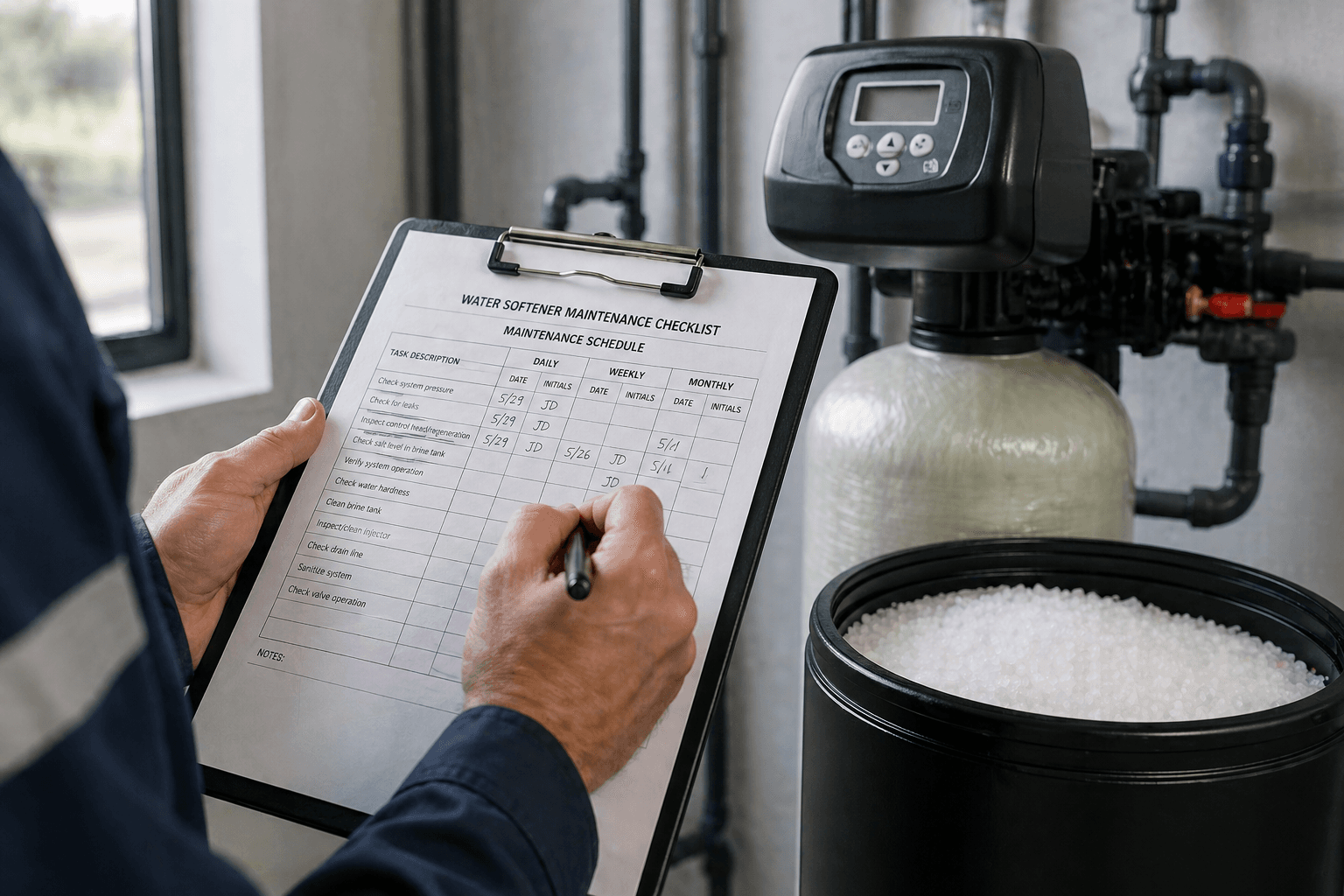
A water treatment maintenance schedule is the single most effective tool a building operator or facilities manager can put in place to protect water systems, extend equipment life and avoid the disproportionate cost of reactive repairs. Without a structured programme, systems quietly degrade: filters run past their service life, softener resin exhausts, scale accumulates and hygiene standards slip.
In Kuwait the schedule has one extra pillar that European guides skip: storage tanks. Almost every building here stores water at ground and roof level, and in summer heat a neglected tank undoes every stage of treatment downstream of it.
What belongs in the schedule
A complete commercial schedule covers five layers:
- Filtration: cartridge and media changes on capacity or calendar, whichever comes first.
- Softening: salt levels, regeneration checks and periodic resin assessment.
- RO plant: flow, pressure and TDS logging, pre-filter changes and planned membrane replacement.
- Disinfection: UV lamp changes annually, sleeve cleaning and dose verification.
- Storage: tank inspection and professional cleaning, typically at least annually and more often where heat and turnover demand it.
Frequency, from daily to annual
Daily and weekly tasks are light-touch: visual checks, salt top-ups, a glance at pressure gauges and TDS readouts. Monthly brings filter inspections and performance logging against the commissioning baseline. Quarterly aligns with planned service visits, which is exactly the cadence our plans run from. Annually: line disinfection, UV lamp replacement, tank cleaning and a full system review.
The discipline that makes it work is logging. A reading only means something against last month's reading, which is why every Sovereign service visit ends with the numbers recorded in your service history.
Legionella and warm-climate hygiene
Internationally recognised guidance, such as the UK's HSG274 and L8 approach that many GCC operators adopt as best practice, treats temperature control, regular flushing of low-use outlets and tank hygiene as the foundations of Legionella control. Kuwait's ambient temperatures push cold-water systems into the bacterial growth zone for much of the year, which strengthens the case for routine monitoring, tank cleaning and, at higher-risk sites, UV disinfection as an engineered barrier.
Planned versus reactive
Reactive maintenance always looks cheaper until the invoice arrives with downtime attached. Planned servicing costs are predictable, failures become rare, warranties stay valid and equipment reaches its design life. That is the entire premise of our Comprehensive Maintenance plans: scheduled visits from every three months, consumables on autopilot and a documented service history for every asset.
Frequently asked questions
How often should a commercial system be serviced?
Planned visits from every three months, with the exact interval set by water quality and application.
How often should building tanks be cleaned?
At least annually, and more often for high-turnover or high-risk sites. Ask us to inspect and advise.
Who keeps the records?
We do, digitally, for every site under maintenance cover, so audits and warranty claims are paperwork-free.
Talk to our team and we will build the schedule around your equipment list.