ZIP HydroTap Review Kuwait: Why This Comparison Matters for Commercial Buyers
Kuwait's commercial sector is undergoing a significant upgrade cycle in workplace and hospitality infrastructure. Facility managers and business owners are increasingly moving away from bottled water dispensers and basic filtered coolers toward integrated boiling water tap systems that deliver instant boiling, chilled and sparkling water directly from the counter. Two products dominate the shortlist for most commercial procurement decisions in this category: the ZIP HydroTap G5 and the BRITA Extra C-Tap. This review examines both in detail, specifically within the context of Kuwait's operating environment.
The relevance of this comparison is not simply about product features. It is about which system performs reliably, maintains water quality consistently and delivers genuine operational value when installed in Kuwait's commercial buildings. Those are distinct questions from asking which product performs well in a temperate European climate with stable municipal water. Kuwait's conditions introduce variables that affect filtration load, maintenance frequency, component longevity and ultimately the total cost of ownership.
Kuwait's Water Quality Challenges
Kuwait relies almost entirely on desalinated water, produced through multi-stage flash distillation and reverse osmosis processes. While desalination removes many contaminants, the resulting water is then blended, re-mineralised and distributed through an aging municipal network. This creates a supply profile that is genuinely challenging for any point-of-use water treatment system.
Key characteristics of Kuwait's municipal water supply that affect commercial boiling water tap installations include:
-
Elevated Total Dissolved Solids (TDS): Blended desalinated and groundwater supplies can produce TDS readings that vary considerably across districts, placing higher demands on filtration cartridges and scale inhibition systems.
-
High water hardness: Calcium and magnesium concentrations in Kuwait's distributed water accelerate limescale formation in heating elements and internal pipework, directly affecting boiling performance and component lifespan.
-
Residual chlorine and chloramines: Disinfection treatment introduces chlorine compounds that affect taste, odour and the integrity of internal seals and membranes over time.
-
Sediment variability: Building pipework inconsistency, particularly in older commercial properties, introduces particulate matter that pre-filtration systems must manage effectively.
-
Ambient temperature: Kuwait's extreme summer temperatures affect chilled water performance and the thermal management demands placed on under-counter units.
These are not marginal considerations. They are the operational reality that any boiling water tap system must be specified against when procuring for Kuwait's commercial market.
Scope of This Review
This article provides full product profiles for both the ZIP HydroTap G5 and the BRITA Extra C-Tap, followed by a section-by-section analysis covering filtration performance, output capacity, installation requirements, maintenance demands and total cost of ownership. The review concludes with a practical verdict structured by client priority rather than a single overall winner, because the right choice depends on the specific application, building type and operational requirements of each buyer.
Whether you are specifying for a corporate office, a hospitality venue, a healthcare facility or a high-footfall retail environment in Kuwait, the analysis that follows is designed to give you the information needed to make a confident, well-informed procurement decision.
Product Profiles: ZIP HydroTap G5 and BRITA Extra C-Tap at a Glance
ZIP HydroTap G5: Full Profile
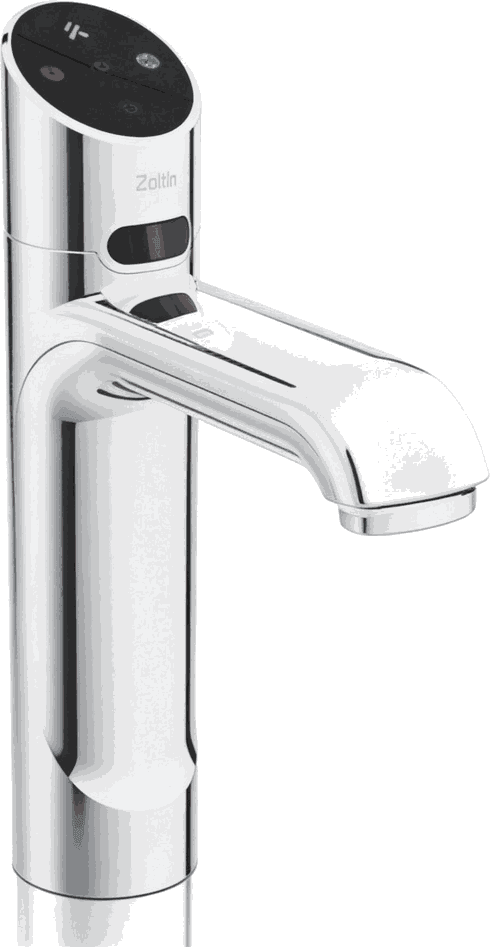
The ZIP HydroTap G5 represents the fifth generation of ZIP Water's flagship commercial boiling water tap, manufactured in Australia with a strong distribution and service presence across the Middle East and international markets. It is widely regarded as one of the most technically refined products in the premium boiling water tap category, and its specification reflects that positioning.
The G5 is available in multiple functional configurations, allowing buyers to select the combination of outputs that matches their operational requirements. Available functions include:
-
Boiling water: Delivered at 98 degrees Celsius, suitable for hot beverages, instant soups and catering applications.
-
Chilled filtered water: Delivered at approximately 8 degrees Celsius, providing a consistent cold drinking water output without the need for a separate cooler.
-
Sparkling chilled water: Available on selected models, with an integrated carbonation system housed within the under-counter unit.
The G5 is available in a range of tap designs and finishes, including Brushed Chrome, Gloss Chrome, Matte Black and Brushed Gold, allowing it to integrate with high-specification commercial interiors. The under-counter unit has a compact footprint, designed to fit within standard commercial cabinetry without requiring significant modification to existing installations.
Smart controls are a defining feature of the G5. The system includes a capacitive touch interface with child-safety activation, real-time filter monitoring, usage tracking and remote diagnostics capability. The G5 also incorporates ZIP's patented tank-in-tank insulation technology, which reduces energy consumption by maintaining water temperature efficiently rather than continuously reheating.
ZIP Water's British manufacturing heritage, combined with its global service network, gives the G5 strong credentials for commercial buyers who require reliable after-sales support in international markets including Kuwait.
BRITA Extra C-Tap: Full Profile
The BRITA Extra C-Tap is BRITA's commercial boiling water tap solution, developed to bring the brand's established filtration expertise into the point-of-use tap category. BRITA is a German brand with over five decades of water filtration heritage, and the Extra C-Tap reflects that background with a strong emphasis on filtration performance and hygiene engineering.
The Extra C-Tap delivers boiling and chilled filtered water, with configurations available to suit different commercial environments. Its core differentiators are the integrated BRITA PURITY filtration system and the proprietary ThermalGate hygiene technology.
ThermalGate is a thermal disinfection mechanism built into the tap's internal water pathway. It periodically heats the water contact surfaces to eliminate bacterial growth within the system, addressing one of the primary hygiene concerns associated with point-of-use water dispensing equipment. This is a particularly relevant feature for healthcare, food service and hospitality applications where hygiene compliance is a formal requirement.
The Extra C-Tap is manufactured to European quality standards, with a build quality that reflects BRITA's positioning as a premium filtration brand. Finish options are more limited than the ZIP G5, but the product presents well in professional commercial environments.
Side-by-Side Specification Summary
Specification
ZIP HydroTap G5
BRITA Extra C-Tap
  **Available Functions**
  Boiling, Chilled, Sparkling
  Boiling, Chilled


  **Boiling Output**
  Up to 60 cups per hour
  Up to 40 cups per hour


  **Filtration System**
  ZIP inline filter with scale inhibition
  BRITA PURITY C filtration system


  **Hygiene Technology**
  UV sterilisation (selected models)
  ThermalGate thermal disinfection


  **Finish Options**
  Chrome, Matte Black, Brushed Gold
  Chrome, Matte Black


  **Under-Counter Unit**
  Compact, standard cabinetry compatible
  Compact, standard cabinetry compatible


  **Smart Controls**
  Capacitive touch, remote diagnostics
  Digital display, filter alert system


  **Maintenance Interval**
  Filter change every 6 to 12 months
  Filter change based on usage volume


  **Manufacturing Origin**
  Australia, British heritage
  Germany, European manufacturing
Both products are positioned at the premium end of the commercial boiling water tap market, and both are credible choices for Kuwait's commercial sector. The differences between them become more significant when assessed against Kuwait's specific water conditions and operational requirements, which the following sections address in detail.
Filtration Performance in Kuwait's Water Conditions
Why Filtration Specification Is Critical in Kuwait
For commercial buyers in Europe or North America, filtration performance is often a secondary consideration. Municipal water quality in those regions is generally stable, relatively soft and consistently treated. The filtration system in a boiling water tap is expected to improve taste and remove residual chlorine, but it is rarely under significant stress.
Kuwait's situation is fundamentally different. The municipal supply is a blend of desalinated water and treated groundwater, distributed through a network that includes aging infrastructure in many commercial districts. The result is a water supply that can present elevated TDS levels, variable hardness, residual chlorine and chloramine compounds, and occasional sediment from building pipework. Any boiling water tap installed in Kuwait is operating under materially higher filtration demands than the same product installed in a comparable European office.
This matters for several practical reasons. Higher TDS and hardness accelerate limescale formation on heating elements, reducing boiling efficiency and shortening component lifespan. Residual chlorine and chloramines affect taste and odour at the point of dispense, and can degrade internal seals and membranes over time. Sediment from building pipework can block or prematurely exhaust filter cartridges, increasing maintenance frequency and operational cost. Specifying a filtration system that is genuinely rated for these conditions is not a premium consideration. It is a baseline requirement for reliable commercial operation in Kuwait.
ZIP HydroTap G5 Filtration Assessment
The ZIP HydroTap G5 uses an inline filter cartridge that combines activated carbon block filtration with a scale inhibition medium. The activated carbon element addresses chlorine, chloramines, taste and odour compounds, while the scale inhibition component works to reduce limescale formation within the heating tank and internal pipework.
ZIP's filter cartridges are rated to a standard capacity, typically expressed in litres processed, with a recommended change interval of six to twelve months under normal operating conditions. In Kuwait's water environment, the effective service life of the cartridge is likely to be shorter than the upper end of that range, particularly in buildings with higher incoming TDS or hardness levels. Buyers should factor in more frequent filter changes when calculating total cost of ownership for Kuwait installations.
The G5's smart monitoring system provides real-time filter status alerts, which is a practical advantage in commercial environments where maintenance scheduling is managed centrally. The system tracks both time elapsed and volume processed, giving a more accurate indication of cartridge condition than a simple calendar-based reminder.
One consideration for Kuwait specifically is that the G5's scale inhibition approach uses a polyphosphate or similar sequestering agent rather than a full ion exchange process. This is effective at moderate hardness levels but may require supplementary pre-filtration or more frequent cartridge replacement in buildings where incoming water hardness is consistently high.
BRITA Extra C-Tap Filtration Assessment
The BRITA Extra C-Tap uses the BRITA PURITY C filtration system, which is a professional-grade filtration platform developed specifically for commercial food service and beverage applications. BRITA PURITY has an established track record in high-TDS environments, including markets across the Middle East and Asia where incoming water quality presents challenges comparable to Kuwait's.
The PURITY C system combines activated carbon filtration with an ion exchange resin, which actively reduces water hardness by exchanging calcium and magnesium ions. This is a more comprehensive approach to scale prevention than polyphosphate-based inhibition, and it is particularly relevant for Kuwait's conditions where hardness levels can be significant. By reducing the hardness of the water before it reaches the heating element, the PURITY C system directly extends the service life of the boiling tank and reduces the risk of performance degradation over time.
BRITA PURITY cartridges are rated by volume capacity, with the specific cartridge size selected at installation based on the expected daily usage and the incoming water quality profile. This allows the system to be properly specified for Kuwait's water conditions from the outset, rather than relying on a standard cartridge that may be undersized for the local environment.
The BRITA Extra C-Tap also includes a filter monitoring system that tracks volume processed and alerts the operator when a cartridge change is due. Given the higher filtration demands of Kuwait's water supply, this monitoring capability is an important operational feature for facility managers responsible for maintaining multiple units across a commercial estate.
From a filtration performance perspective, the BRITA PURITY C system's ion exchange capability gives the Extra C-Tap a measurable advantage in Kuwait's specific water conditions, particularly for installations where incoming hardness is a primary concern. The ZIP G5's filtration is competent and well-engineered, but the PURITY C platform has a deeper heritage in demanding water quality environments and a more active approach to hardness management.
Hygiene, Safety and Compliance Considerations
Commercial water dispensing in Kuwait operates within a demanding set of environmental and regulatory conditions. Corporate offices in Shuwaikh, hospitality venues along the Gulf Road, healthcare facilities and food service operations all share a common requirement: water dispensed to staff, guests or patients must meet consistent hygiene standards regardless of what happens upstream in the building's pipework. Kuwait's water infrastructure, which relies heavily on desalinated supply distributed through storage tanks and extended pipework runs, introduces real variability in microbial risk at the point of use. Choosing a dispensing unit with robust hygiene engineering is therefore not a cosmetic consideration but a compliance and duty-of-care issue.
BRITA Extra C-Tap: ThermalGate Hygiene Mechanism
The BRITA Extra C-Tap incorporates a proprietary hygiene feature known as ThermalGate. This mechanism is designed to prevent microbial ingress at the dispense point by periodically flushing the spout and internal water pathway with hot water. The principle is straightforward: by maintaining elevated temperatures within the dispense circuit at defined intervals, ThermalGate inhibits the conditions under which bacteria such as Legionella pneumophila and other opportunistic pathogens can colonise internal surfaces.
This is particularly relevant in Kuwait's commercial context. Buildings with large rooftop storage tanks, long horizontal pipe runs or intermittent water usage patterns create stagnation risks that standard filtration alone cannot fully address. ThermalGate provides an active, automated response to this risk rather than relying solely on passive filtration. For facility managers operating in healthcare or food service environments where hygiene audit trails matter, the automated nature of this process also supports documentation and compliance reporting.
BRITA's filtration technology within the Extra C-Tap further reduces chlorine taste and odour, which is a meaningful benefit given Kuwait's reliance on heavily treated desalinated water. The combination of chemical reduction and thermal hygiene management addresses two distinct but related concerns in a single unit.
ZIP HydroTap G5: Safety Engineering and High-Traffic Hygiene
The ZIP HydroTap G5 approaches hygiene and safety from a different but equally considered direction. Its most visible safety feature is the child-safe boiling water activation system, which requires a deliberate two-step action to dispense near-boiling water. In commercial environments such as hotel lobbies, corporate reception areas or staff canteens where the user population is mixed and unpredictable, this reduces the risk of accidental scalding without restricting access for authorised users.
ZIP's insulated spout technology addresses a secondary but important hygiene concern: condensation and external surface contamination. By maintaining the outer spout surface at a controlled temperature, the design reduces the likelihood of moisture accumulation that can support microbial growth on external contact surfaces. In high-traffic environments where the spout may be touched repeatedly throughout the day, this is a meaningful design consideration.
The G5 also incorporates internal self-sanitising protocols and uses food-grade materials throughout its water contact surfaces. ZIP recommends annual servicing by certified engineers, and in Kuwait's commercial market, this aligns with the maintenance expectations of facilities teams managing multiple assets across large office or hospitality campuses.
Both units demonstrate a serious commitment to hygiene engineering. The BRITA Extra C-Tap's ThermalGate offers a more explicit response to Kuwait's specific pipework and storage variability, while ZIP's G5 provides comprehensive safety features suited to diverse, high-footfall commercial environments. The appropriate choice will depend on the specific risk profile of the facility in question.
Design, Finishes, Controls and Footprint
Specification decisions for commercial drinking water systems in Kuwait are rarely made on performance alone. In prestige office developments in Kuwait City's financial district, five-star hospitality properties and high-end corporate headquarters, the visible elements of a water dispensing unit contribute directly to the interior narrative. Equally, the control interface and under-counter footprint affect daily operational efficiency and installation feasibility. Both ZIP HydroTap G5 and BRITA Extra C-Tap have been developed with these considerations in mind, though they approach them differently.
Aesthetic Range and Finish Options
The ZIP HydroTap G5 is available in a broad range of finishes, including polished chrome, brushed chrome, matt black and gunmetal. This breadth of choice is a genuine commercial advantage. Interior designers and fit-out contractors working on prestige Kuwait projects can match the HydroTap to existing tapware, hardware and fixture specifications without compromise. Matt black, in particular, has become a preferred specification in contemporary commercial interiors across the Gulf region, and ZIP's ability to supply this finish in a fully functional boiling, chilled and sparkling unit gives it strong appeal in high-specification environments.
The BRITA Extra C-Tap offers a more limited finish range, typically available in chrome and select alternative finishes depending on the model variant. For standard commercial office environments, this is unlikely to present a barrier. However, in hospitality or prestige corporate settings where finish consistency across a pantry or kitchen suite is a design requirement, the narrower palette may require additional coordination at the specification stage.
Smart Controls and Remote Monitoring
The ZIP HydroTap G5 features a capacitive touchscreen interface on the tap itself, providing intuitive temperature and function selection. Beyond the physical interface, ZIP's connected models support app-based monitoring, allowing facility managers to track filter life, water usage data and service alerts remotely. For Kuwait-based operations managing multiple sites, whether a corporate group with offices across several districts or a hospitality operator running a portfolio of properties, this remote visibility reduces the administrative burden of manual filter checks and supports proactive maintenance scheduling.
BRITA's control approach on the Extra C-Tap is more straightforward, with clear indicator systems for filter replacement and operational status. While this simplicity has merit in environments where staff turnover is high and complex interfaces create training overhead, it does not offer the same depth of data connectivity as ZIP's platform. In a Kuwait commercial context where sustainability reporting and resource management are increasingly tied to corporate governance requirements, the ability to export water consumption data from a connected ZIP unit may carry meaningful value for ESG documentation.
Under-Counter Footprint and Installation Requirements
The ZIP HydroTap G5's under-counter boiler unit has a defined footprint that requires careful cabinetry planning. The unit is compact relative to its output capacity, but it does require dedicated under-sink space, appropriate drainage provision and electrical supply. In Kuwait's commercial fit-outs, where pantry areas in office towers are often designed to tight dimensions, early coordination between the MEP consultant and the interior fit-out contractor is advisable to ensure the boiler unit can be accommodated without compromising storage or workflow.
The BRITA Extra C-Tap's under-counter components are similarly compact, and BRITA's installation documentation is well-structured for commercial environments. In particularly space-constrained settings, such as compact server room pantries or secondary staff kitchens in smaller commercial units, the specific dimensional comparison between the two units should be assessed against the actual available cabinet depth and width before specification is confirmed.
Overall, ZIP's finish versatility and smart connectivity give it a stronger position in prestige and multi-site Kuwait commercial environments. BRITA's simpler interface and reliable installation profile make it a practical choice where operational simplicity is the primary requirement.
Power Consumption, Running Costs and Sustainability
Energy efficiency is an increasingly important factor in commercial equipment specification across Kuwait. With the government's commitment to diversifying the energy mix and reducing per-capita consumption as part of Kuwait Vision 2035, facility managers and procurement teams are under growing pressure to demonstrate that operational choices align with broader sustainability objectives. For a piece of equipment that runs continuously throughout the working day, the energy profile of a drinking water system is a legitimate line item in both the operational budget and the environmental impact assessment.
Energy Consumption and Eco Mode Performance
The ZIP HydroTap G5 incorporates an energy-saving sleep mode that reduces power draw during periods of low or no usage, such as overnight or during weekends. ZIP publishes energy consumption data for its G5 range, with figures varying by model configuration and usage pattern. The unit's insulation technology, which surrounds the internal boiler tank with high-performance thermal cladding, reduces the frequency and intensity of reheat cycles, directly lowering energy consumption over a working day.
The BRITA Extra C-Tap similarly incorporates standby and eco operating modes. Its thermal management is designed to maintain water at dispensing temperature with minimal energy input between draw-off events. In Kuwait's commercial environment, where ambient temperatures in plant rooms and under-counter spaces can be elevated due to the external climate, the efficiency of insulation becomes more significant. A unit that relies on frequent reheat cycles to compensate for heat loss to a warm surrounding environment will consume more energy than its rated figures suggest under standard European test conditions.
Insulation Efficiency in Kuwait's Climate
This climate consideration is worth examining carefully. Kuwait's summer temperatures regularly exceed 45 degrees Celsius externally, and while commercial interiors are air-conditioned, under-counter and plant room temperatures can still run higher than the controlled laboratory conditions used for manufacturer energy ratings. Both ZIP and BRITA have engineered their units for international commercial deployment, but specifiers should request real-world energy data from comparable Gulf installations where available, rather than relying solely on European benchmark figures.
Sustainability Credentials and Corporate Responsibility
Both units contribute meaningfully to plastic bottle reduction, which remains one of the most visible sustainability metrics for commercial organisations in Kuwait. A single HydroTap or Extra C-Tap installation serving a medium-sized office can eliminate thousands of single-use plastic bottles annually. This reduction supports corporate environmental responsibility reporting and aligns with Kuwait's stated ambitions to reduce plastic waste as part of its Vision 2035 framework.
BRITA operates an established filter cartridge return and recycling programme in several markets. Availability of this programme through local distribution partners in Kuwait should be confirmed at the specification stage. ZIP similarly supports responsible filter disposal through its service network. For organisations that include supply chain sustainability in their procurement criteria, the availability of a documented end-of-life process for consumables is a relevant differentiator.
Both units represent a responsible operational choice relative to bottled water alternatives. The decision between them on energy grounds will ultimately depend on site-specific usage patterns, installation environment and the availability of verified consumption data from comparable Kuwait deployments.
Kuwait Application Guide: Which Unit Suits Which Environment
Selecting the right instant hot water tap for a Kuwait facility is not simply a matter of comparing specifications on paper. The operating environment, daily demand profile, aesthetic requirements and local water quality all shape which unit will perform most reliably over its service life. The following guidance addresses three primary commercial settings where both the ZIP HydroTap G5 and the BRITA Extra C-Tap are regularly specified.
Corporate Offices and Co-Working Spaces
Modern corporate offices and co-working environments in Kuwait place a premium on visual coherence. Fit-out teams and facilities managers increasingly treat kitchen and breakout zones as extensions of the brand environment, which means the finish, form factor and interface of a drinking water unit carry genuine weight in the specification process.
The ZIP HydroTap G5 holds a clear advantage here. With seven faucet designs available in Bright Chrome and Matt Black, and compatibility with Sovereign Water's RoyalFlow Series, the G5 integrates cleanly into contemporary interior schemes without compromise. Its compact under-counter boiler unit is well suited to the limited service voids common in fit-out projects, and the smart touch controls provide an intuitive experience for a rotating workforce of varying technical familiarity.
The BRITA Extra C-Tap is a capable unit in this setting, but its design language is more utilitarian. For offices where aesthetics are a secondary consideration and filtration consistency is the primary concern, it remains a sound choice. However, for design-led corporate environments, the G5's finish variety and interface refinement give it a meaningful edge.
Hospitality, Hotels and Food Service
Kuwait's hospitality sector operates under demanding conditions. High footfall, extended service hours and the reputational sensitivity of water quality in guest-facing environments all require a unit that combines robust filtration with consistent output and straightforward hygiene management.
This is where the BRITA Extra C-Tap's heritage becomes directly relevant. BRITA's filtration technology has been developed and refined over decades, and the Extra C-Tap's build quality reflects a product engineered for sustained heavy use. Its ThermalGate hygiene technology, which prevents bacterial ingress at the point of dispense, addresses a genuine concern in high-traffic food service environments where hygiene compliance is non-negotiable.
The ZIP HydroTap G5 is not without merit in hospitality settings, particularly where design continuity across a property is a priority. However, for back-of-house food service operations and hotel facilities where volume and hygiene consistency take precedence over aesthetics, the BRITA Extra C-Tap is the more defensible specification.
Healthcare, Education and Mixed-Use Facilities
Healthcare and education facilities in Kuwait present a distinct set of challenges. Water quality variability across different municipal supply zones, strict hygiene compliance requirements and the need for maintenance accessibility in busy operational environments all influence unit selection.
Kuwait's water supply, while treated to municipal standards, carries elevated total dissolved solids and hardness levels that accelerate scale build-up in heating elements. Both units require appropriate filtration to manage this, but the BRITA Extra C-Tap's filtration architecture is specifically designed to handle variable incoming water quality with greater consistency. For healthcare environments where water purity directly affects patient and staff welfare, this reliability is a significant consideration.
In education settings, where maintenance resource is often limited and units must operate with minimal intervention between scheduled service visits, the BRITA Extra C-Tap's longer filter change intervals and robust construction reduce the administrative burden on facilities teams. For mixed-use facilities where a single unit must serve diverse user groups across extended hours, the same logic applies.
The ZIP HydroTap G5 remains a viable option in these settings where smart monitoring and remote diagnostics are valued, as its connected controls can alert facilities managers to filter status and usage data. For organisations with the infrastructure to act on that data, this capability adds genuine operational value.
Maintenance, Support and Final Verdict for Kuwait Buyers
Long-term performance in Kuwait's operating conditions depends as much on maintenance discipline and service availability as it does on initial specification quality. Both the ZIP HydroTap G5 and the BRITA Extra C-Tap require structured maintenance programmes, but their schedules and support ecosystems differ in ways that matter to Kuwait buyers.
Maintenance Schedules and Filter Change Intervals
The ZIP HydroTap G5 operates on a filter change interval that varies according to incoming water quality and usage volume. In Kuwait's conditions, where hardness and TDS levels are elevated, filter consumption accelerates relative to European benchmarks. Sovereign Water recommends that Kuwait installations are assessed individually to establish realistic service intervals rather than relying on manufacturer defaults calibrated for softer water supplies. The G5's smart controls assist with this by providing usage-based filter life monitoring, reducing the risk of operating beyond optimal filtration capacity.
The BRITA Extra C-Tap similarly requires regular filter replacement, with intervals determined by water quality and throughput. BRITA's filtration cartridges are engineered to handle variable incoming water, and the system's design makes cartridge replacement straightforward for trained service technicians. Descaling requirements for both units are driven by Kuwait's water hardness, and a structured descaling schedule is essential to protect heating elements and maintain output temperature consistency.
Service Support in Kuwait and the GCC
Service availability is a practical consideration that is often underweighted at the specification stage. Both brands have established distribution and service networks across the GCC, but the depth of local technical support varies by market. Sovereign Water provides on-the-ground service support for both units in Kuwait, including scheduled maintenance contracts, emergency call-out and water quality testing to inform filter selection and service intervals. Buyers should confirm service response commitments at the point of procurement rather than assuming manufacturer network coverage translates directly to local availability.
Section-by-Section Summary
Reviewing the comparison across all assessed criteria, the following picture emerges:
-
Colour and finish variety: ZIP HydroTap G5 leads, with seven faucet designs and multiple finish options suited to design-conscious commercial environments.
-
Smart controls and connectivity: ZIP HydroTap G5 leads, with integrated touch controls and usage monitoring that add operational value in managed facilities.
-
Compact footprint and installation flexibility: ZIP HydroTap G5 leads, with an under-counter boiler unit well suited to constrained service voids.
-
Filtration heritage and consistency: BRITA Extra C-Tap leads, with decades of filtration development and a system architecture designed for variable water quality.
-
Build robustness and longevity: BRITA Extra C-Tap leads, with a construction profile suited to sustained heavy use in demanding commercial environments.
-
Hygiene technology: BRITA Extra C-Tap leads, with ThermalGate technology providing active protection against bacterial ingress at the point of dispense.
Final Verdict
Neither unit is the universal answer for Kuwait buyers. The ZIP HydroTap G5 is the stronger specification for design-led corporate environments, co-working spaces and facilities where smart controls and aesthetic integration are primary drivers. The BRITA Extra C-Tap is the more defensible choice for hospitality, healthcare, education and high-demand food service environments where filtration reliability, hygiene compliance and build durability take precedence.
The most important variable in any Kuwait specification is the actual water quality data from the intended installation site. Hardness levels, TDS readings and usage projections all affect which unit will perform most cost-effectively over its service life. Sovereign Water conducts site assessments that combine water quality testing with facility-specific usage analysis to produce a recommendation grounded in real operating conditions rather than generalised benchmarks.
Kuwait buyers are encouraged to contact Sovereign Water before finalising any specification, to ensure the selected unit is matched to the demands of their specific environment.
Frequently Asked Questions
Is the ZIP HydroTap G5 suitable for Kuwait's hard water conditions?
The ZIP HydroTap G5 can operate effectively in Kuwait's hard water conditions, but it requires appropriate pre-filtration and a maintenance schedule calibrated to local water quality rather than European defaults. Kuwait's elevated hardness and TDS levels accelerate scale build-up in heating elements, which shortens filter life and increases descaling frequency relative to softer water markets. Sovereign Water recommends a site-specific water quality assessment before installation to establish the correct filtration configuration and service intervals. Without this, buyers risk operating the unit outside its optimal parameters, which affects both performance and longevity.
How does BRITA's ThermalGate technology address hygiene requirements in commercial settings?
ThermalGate is a hygiene mechanism integrated into the BRITA Extra C-Tap's dispense point that uses controlled thermal conditions to prevent bacterial ingress at the tap outlet. In commercial environments where units may experience periods of low usage, such as overnight or across weekends, the risk of bacterial colonisation at the dispense point is a recognised concern. ThermalGate addresses this by maintaining conditions at the outlet that are inhospitable to bacterial growth, without requiring manual intervention from facilities staff. This is particularly relevant in healthcare and food service environments where hygiene compliance is subject to formal audit and regulatory oversight.
Can Sovereign Water service both ZIP HydroTap and BRITA units in Kuwait?
Yes. Sovereign Water provides maintenance and service support for both the ZIP HydroTap G5 and the BRITA Extra C-Tap in Kuwait and across the wider GCC region. This includes scheduled maintenance contracts covering filter replacement, descaling and performance checks, as well as water quality testing to inform ongoing service intervals. Having a single service provider for both unit types simplifies facilities management and ensures that maintenance is carried out by technicians familiar with Kuwait's specific water quality conditions. Prospective buyers are encouraged to discuss service contract terms at the specification stage to confirm response times and coverage scope before committing to a unit.
Need Support With This?
Contact Sovereign Water to discuss how we can help. Get in touch.
Products mentioned in this article
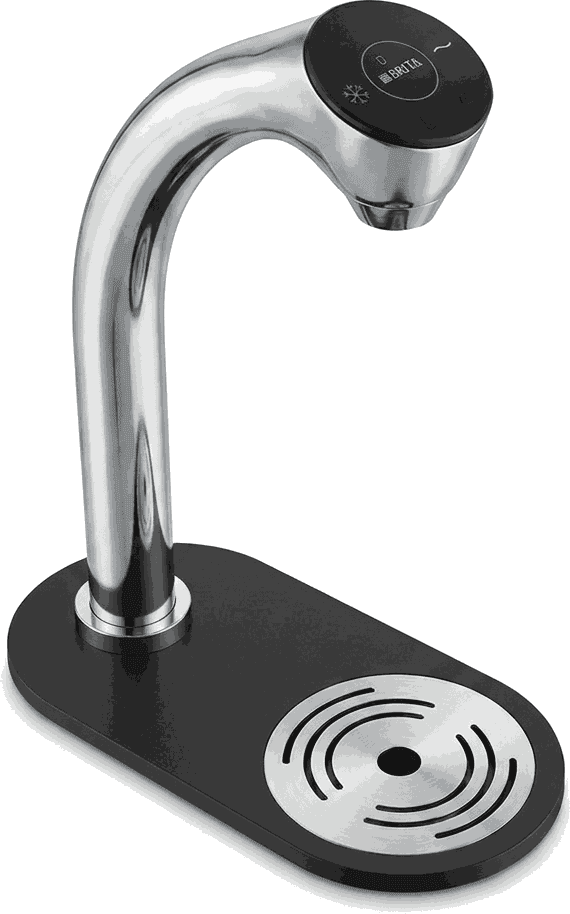
BRITA's signature undercounter dispenser delivers up to five water types from a single brushed stainless steel tap…
View product →